


v Program Objective & Overview
The one-month training program on Cyber Forensics and Cyber Crime Investigation was designed to provide comprehensive understanding of procedures involved in the identification, preservation, collection, and examination of digital evidence from cybercrime scenes. Emphasis was placed on the systematic handling of electronic devices, digital storage media, and network-based evidence in accordance with forensic and legal standards.
The program was structured to integrate theoretical concepts with practical and case-based approaches related to cybercrime investigations. Key areas such as cybercrime scene management, digital evidence acquisition, chain of custody, forensic examination of digital devices, and legal considerations were systematically addressed. The importance of maintaining the integrity, authenticity, and admissibility of digital evidence throughout the investigative process was highlighted. The training aimed to enhance technical awareness, investigative competence, and analytical skills required for effective cybercrime scene investigation and digital forensic examination.
· To develop understanding of principles and procedures of cyber scene investigation
· To explain methods for identification, collection, preservation, and acquisition of digital evidence
· To emphasize the importance of chain of custody and evidentiary integrity in cyber investigations
· To provide knowledge of forensic examination techniques used for digital devices and electronic evidence
· To enhance investigative and analytical skills required for cybercrime scene management and digital forensic investigations
v Modules Covered
1. Introduction to Cyber Security
Fundamental concepts of cybersecurity were explained, including information security principles, cyber risk management, and the importance of securing digital assets.
2. Cyber Laws
Relevant cyber laws, legal provisions, and regulatory frameworks governing cybercrime investigations and digital evidence were discussed.
3. Cyber Crimes and Threats
Various forms of cybercrime, cyber-attacks, and emerging threats were addressed along with their impact on individuals, organizations, and critical infrastructure.
4. Vulnerability Assessment
Common system and network vulnerabilities were explained, including methods used for identifying security weaknesses and mitigating potential risks.
5. Open-Source Intelligence (OSINT)
Techniques and methodologies used for gathering and analysing publicly available information for investigative purposes were introduced.
6. Metadata Analysis
The significance of metadata in digital investigations was discussed, including methods for extraction, examination, and interpretation of metadata from digital files.
7. Digital Crime Scene Management
Procedures for identification, securing, documentation, collection, and preservation of digital evidence at cybercrime scenes were explained with emphasis on maintaining evidentiary integrity.
8. Digital Forensics
Principles and methodologies of digital forensic investigation were addressed, including acquisition, examination, analysis, and reporting of digital evidence from electronic devices and storage media.
v Practical Exposure
1. Open-Source Intelligence (OSINT)
Practical demonstrations were conducted to illustrate the collection and analysis of publicly available information for investigative purposes.
2. Google Dorking Techniques
Exposure to advanced search methodologies was provided through demonstrations of Google Dorking techniques used for information gathering and reconnaissance.
3. FTK Imager
Practical sessions were conducted using FTK Imager, including demonstrations on the creation of logical drive images and acquisition of digital evidence while maintaining evidentiary integrity.
4. Autopsy
Hands-on demonstrations of Autopsy were provided to explain digital forensic examination, evidence analysis, file recovery, and interpretation of investigative findings from digital devices.
v Resource Persons/Experts
1. MS Megha Jain
She is an Assistant Professor in the Department of Information Technology at Parul Institute of Engineering & Technology, Parul University, Vadodara, and currently serves as Secretary at Applied Forensic Research Sciences. With a strong interdisciplinary foundation, she holds dual Master’s degrees — M.sc IT in with specialization in Cyber Security & Forensic Science — along with a Bachelor’s degree in Forensic Science. During an internship, she conceptualized and developed _OSINT_, an Open-Source Intelligence (OSINT) Tool for digital investigations, and completed projects in *Vulnerability Assessment & Penetration Testing (VAPT)* with hands-on experience using industry tools like *Burp Suite* and *Nmap* for real-world security testing. An active researcher and reviewer, she has published multiple research and review papers in the domains of cyber forensics, information security, and digital investigation, and regularly mentors students in research methodology, paper writing, and academic publication. Beyond academics, she is an experienced host and coordinator for national seminars, workshops, and expert sessions, bridging the gap between technology and forensic science through education, innovation, and outreach.
v Participants Details
ü This training activity attracted participants coming from varied educational and working backgrounds connected with cyber forensics and cybercrime investigation areas. National and International Participants (B.Sc., M.Sc. Forensic Science Students) and working professionals.
v Learning Outcome
ü Understanding of fundamental concepts of cybersecurity, cybercrime, and digital investigations was developed.
ü Knowledge of cyber laws, digital evidence handling, and cyber scene management procedures was enhanced.
ü The ability to identify and assess cyber threats, vulnerabilities, and security risks was strengthened.
ü Practical skills in OSINT techniques, Google Dorking, and digital evidence acquisition were acquired.
ü Familiarity with forensic tools such as FTK Imager and Autopsy for digital forensic examination was gained.
ü Awareness of metadata analysis, digital evidence preservation, and forensic reporting procedures was improved.
ü Analytical and investigative capabilities required for cybercrime investigations and digital forensics were enhanced.
v Certificate
Completing a one-month training course in Cyber Forensics and Cyber Crime Investigation earned them a certificate. Certification was provided in both electronic (e-certificate) and hard-copy formats for official and academic purposes.
v Media & Visuals






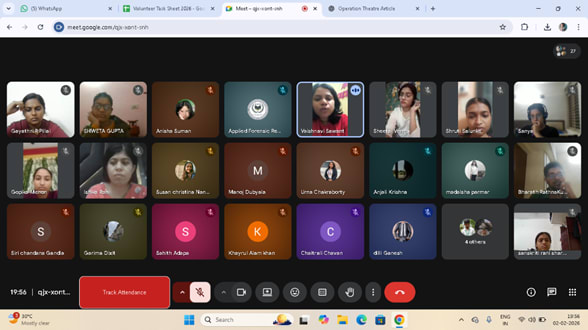
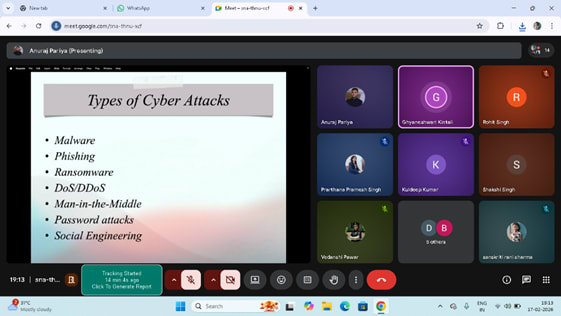
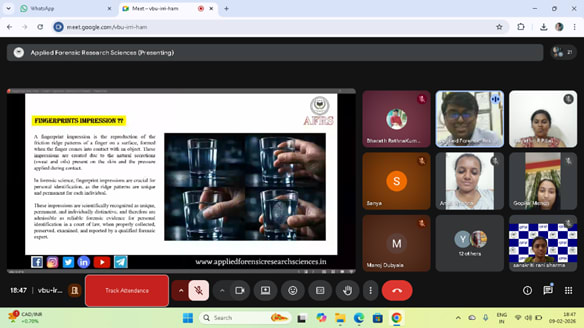
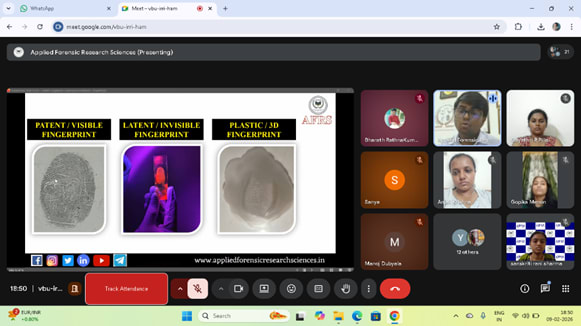
v Conclusion
The one-month training program on Cyber Crime Investigation successfully provided a comprehensive understanding of cybercrime investigation procedures and digital evidence management. Key areas such as cybersecurity fundamentals, cyber laws, cyber threats, OSINT, metadata analysis, digital crime scene management, and digital forensics were systematically addressed. The inclusion of practical demonstrations involving OSINT techniques, Google Dorking, FTK Imager, and Autopsy supported a better understanding of real-world digital investigations and evidence examination. Overall, the program contributed to enhancing technical awareness, investigative competence, and analytical skills required for effective cyber scene investigation and digital forensic practice.