


Program Objective & Overview
The one-month training program on Forensic Biology and Serology was designed to provide comprehensive understanding of biological evidence and its significance in forensic investigations. Emphasis was placed on the identification, collection, preservation, and laboratory examination of biological samples commonly encountered at crime scenes. The program aimed to strengthen knowledge of biological markers, blood and body fluid analysis, and their evidentiary value in criminal cases.
The training was structured to integrate theoretical concepts with case-based illustrations to support accurate interpretation and documentation of biological evidence. Key aspects such as bloodstain examination, serological testing, and the role of biological evidence in crime scene investigation were addressed. The program was intended to enhance analytical understanding, laboratory awareness, and professional competence required for forensic biological examinations.
· To develop an understanding of forensic biology and serology principles used in criminal investigations
· To explain methods for identification, collection, and preservation of biological evidence
· To introduce techniques used in the examination of blood and other body fluids
· To emphasise the role of biological evidence in crime scene investigation and forensic reporting
· To strengthen analytical and interpretative skills related to biological forensic evidence
Modules Covered
1. Introduction to Forensic Biology and Serology
Fundamental concepts of forensic biology and serology were explained with emphasis on the role of biological evidence in criminal investigations and its importance in establishing links between victims, suspects, and crime scenes.
2. Biological Evidence in Forensic Investigations
Various types of biological evidence, such as blood, semen, saliva, hair, and other body fluids commonly encountered at crime scenes, were discussed along with their forensic significance.
3. Collection and Preservation of Biological Evidence
Standard procedures for the identification, collection, packaging, and preservation of biological samples were implemented to prevent contamination and maintain evidentiary integrity.
4. Methods of Biological Evidence Analysis
Laboratory techniques used for examination and analysis of biological samples were explained, including preliminary and confirmatory tests used in forensic serology.
5. Advancements in Tools and Techniques
Recent developments in forensic biology and serological examination, including modern analytical tools and technological advancements, were introduced to highlight their role in improving accuracy and efficiency in forensic investigations.
Practical Exposure
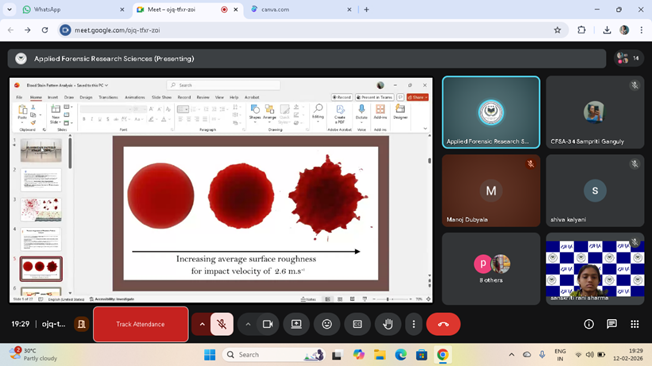
Practical exposure was provided through live demonstrations conducted during the training sessions. The procedures for identification, collection, and preliminary examination of biological evidence were illustrated. In addition, video demonstrations were presented to explain laboratory analysis of biological samples such as blood and semen, thereby improving understanding of serological examination techniques and forensic interpretation.
Resource Persons/Experts
1. Sri Krishna Maurya
He is serving as an Advisory Committee Member at AFRS. He is also a Deputy Director at the Regional Forensic Science Laboratory, Agra, Uttar Pradesh, India.
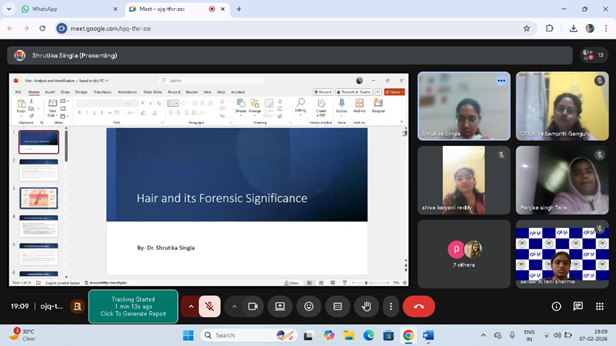
2. Dr. Shrutika Singla
She is the Joint Secretary of Applied Forensic Research Sciences and currently an assistant professor at the College of Traffic Management and Forensic Science, Faridabad (affiliated with NFSU). She has also served as a Research Teaching Associate at Amity Institute of Forensic Sciences, Amity University, Noida, for around 2 years. She has completed her PhD in Forensic Science from Amity Institute of Forensic Sciences, Amity University Uttar Pradesh, Noida, India. Her doctoral research focused on developing and validating advanced analytical and bioanalytical methods for detecting and quantifying anticonvulsant drugs in biological matrices using modern extraction techniques and LC-MS/MS. She has authored and co-authored several research papers and book chapters with reputable international publishers, including Elsevier, Springer, Wiley, and CRC Press, contributing to diverse areas such as forensic toxicology, analytical chemistry, environmental forensics, and machine learning applications in forensic science.
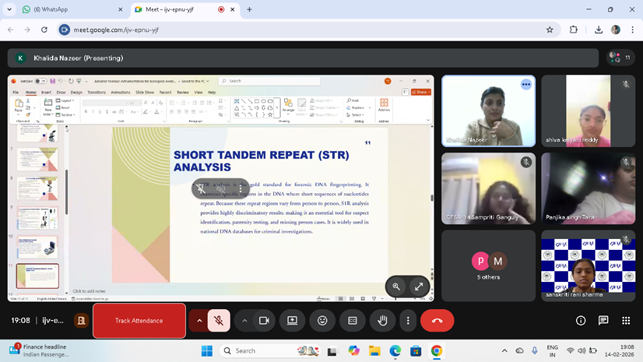
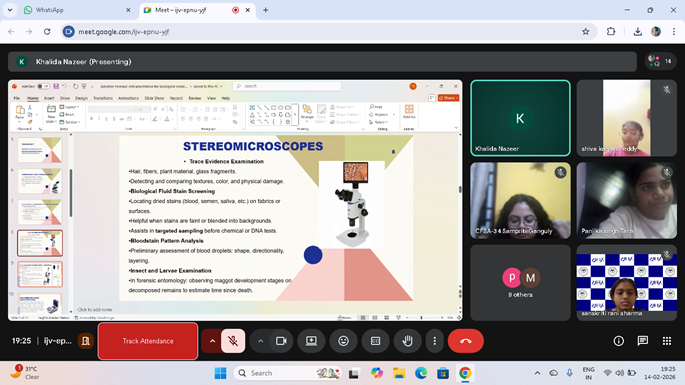
3. Ms. Khalida Nazeer
She is currently an Assistant Professor at Integral University in Lucknow. Previously worked as a Forensic Scientific Assistant in SFSL and CFSL with more than 5 years of analytical experience. Area of expertise- DNA profiling and fingerprinting, Forensic Anthropology & Odontology, Forensic Medicine, Biology and Serology.
Participants Details
ü This training activity attracted participants coming from varied educational and working backgrounds connected with questioned document and fingerprint examination areas. National and International Participants (B.Sc., M.Sc. Forensic Science Students) and working professionals.
Learning Outcome
ü An understanding of fundamental concepts of forensic biology and serology was developed.
ü The ability to identify different types of biological evidence encountered at crime scenes was enhanced.
ü Knowledge of proper collection, preservation, and handling of biological samples was strengthened.
ü Awareness of serological analysis methods used for examination of body fluids such as blood and semen was improved.
ü Familiarity with recent tools and techniques used in forensic biological analysis was gained
Certificate
Completing a one-month training course in Forensic Biology and Serology earned them a certificate. Certification was provided in both electronic (e-certificate) and hard-copy formats for official and academic purposes.
Media & Visuals

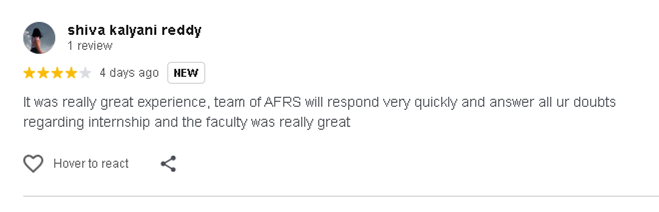
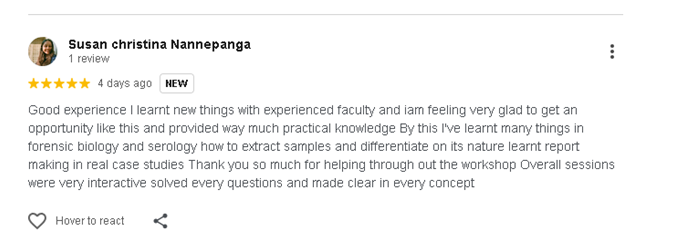
Testimonial

Conclusion
The one-month training program on Forensic Biology and Serology successfully provided structured knowledge regarding the significance of biological evidence in forensic investigations. Important aspects such as identification, collection, preservation, and analysis of biological samples were systematically addressed. The inclusion of live demonstrations and video-based explanations supported a better understanding of serological examination techniques. Overall, the program contributed to enhancing analytical awareness and practical understanding required for the examination and interpretation of biological evidence in forensic science.
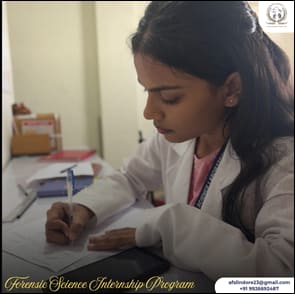
Upcoming Events
Contact & Registration
🌐 Website: www.appliedforensicresearchsciences.in
📧 Email: [email protected]
📞 Contact: +91-9926692487
📌Stay connected with AFRS for upcoming training programs, workshops, and forensic internships.