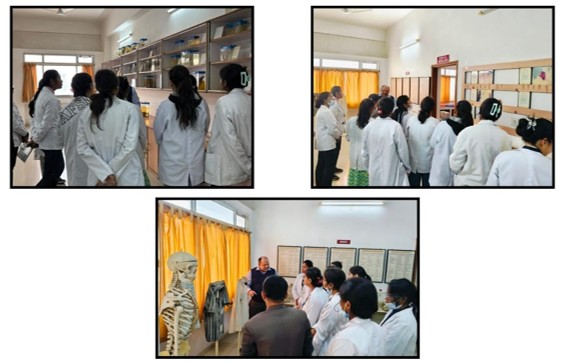
The Applied Forensic Research Sciences (AFRS) stands at the forefront of experiential forensic education, transforming learners into confident, investigation-ready professionals. Rather than relying solely on theory, AFRS immerses participants in dynamic, evidence-driven training environments where every session feels like stepping into a real investigation. Learners navigate simulated crime scenes, decode complex evidence trails, and operate advanced laboratory instruments with expert guidance.
Forensic experts serve as the scientific backbone of the criminal justice system, translating complex evidence into objective, court-admissible conclusions. Their role extends far beyond laboratory analysis—they act as evidence custodians, crime scene interpreters, and scientific advisors to investigative agencies and judicial authorities. A forensic expert must possess a deep command of analytical chemistry, molecular biology, digital forensics, pattern evidence analysis, and crime scene reconstruction. Equally critical are cognitive competencies such as acute observational skills, methodical reasoning, meticulous attention to detail, and the ability to synthesise fragmented information into coherent investigative narratives.
Forensic Experts: Roles and Essential Skills
1. Scientific Analysis of Evidence
- Forensic experts are responsible for conducting systematic, science-based examinations of physical, biological, digital, and trace evidence.
- They apply validated laboratory protocols, analytical instruments, and internationally accepted forensic standards.
2. Crime Scene Documentation & Reconstruction
- Experts meticulously document, preserve, and reconstruct the events of a crime scene using photography, videography, sketching, CAD tools, and digital reconstruction techniques.
- They interpret patterns, object placement, and environmental conditions to establish the sequence of events.
3. Technical Expertise in Specialised Domains
- Forensic professionals possess domain-specific proficiency in areas such as fingerprint science, serology, toxicology, digital forensics, questioned documents, ballistics, and cyber investigation.
- They operate advanced tools like GC-MS, FTIR, DNA sequencers, AFIS, and forensic imaging software.
4. Critical Thinking and Analytical Reasoning
- They evaluate complex evidence patterns using deductive reasoning, inferential logic, and scientific correlation.
- Ability to detect inconsistencies or tampering is crucial for ensuring evidentiary integrity.
5. Legal Knowledge & Courtroom Testimony
- Forensic experts must understand legal frameworks, evidentiary rules, and chain-of-custody protocols.
- They provide unbiased, scientifically sound expert testimony in courts, presenting their findings with clarity and authority.
6. Ethical and Professional Conduct
- Maintaining objectivity, impartiality, confidentiality, and evidence integrity is essential.
- Ethical responsibility ensures credibility and public trust in forensic investigation.
7. Effective Communication & Reporting Skills
- Experts prepare comprehensive forensic reports, integrating scientific interpretations, diagrams, photographs, and analytical findings.
- They must communicate complex scientific concepts in a clear, legally acceptable manner.
8. Continuous Learning & Technological Adaptation
- Forensic science evolves rapidly—experts must stay updated with emerging technologies, new analytical methods, and global forensic standards.
- Participation in refresher courses, proficiency tests, and forensic skill-development programs is essential.
In addition to scientific expertise, forensic professionals must demonstrate proficiency in documentation, chain-of-custody maintenance, forensic photography, and report writing. Their communication skills must be precise and authoritative, as they are often required to present expert testimony in courts of law. Ethical integrity, impartiality, and adherence to standard operating procedures (SOPs) are indispensable traits, ensuring that every conclusion is scientifically defensible and legally sound.
What truly distinguishes AFRS is its integration of real case experiences. Trainees dissect anonymised landmark cases ranging from intricate cybercrimes to sensational homicide investigations, allowing them to witness how forensic science unravels truth in high-stakes scenarios. These case explorations sharpen critical thinking, enhance evidence interpretation, and cultivate the ability to reconstruct events with scientific precision.
AFSL offers an extensive suite of specialised training modules, including
- Fingerprint Examination
- Handwriting, Signature & Documents Examination
- Voice Examination
- Computer/Cyber Crime Investigation
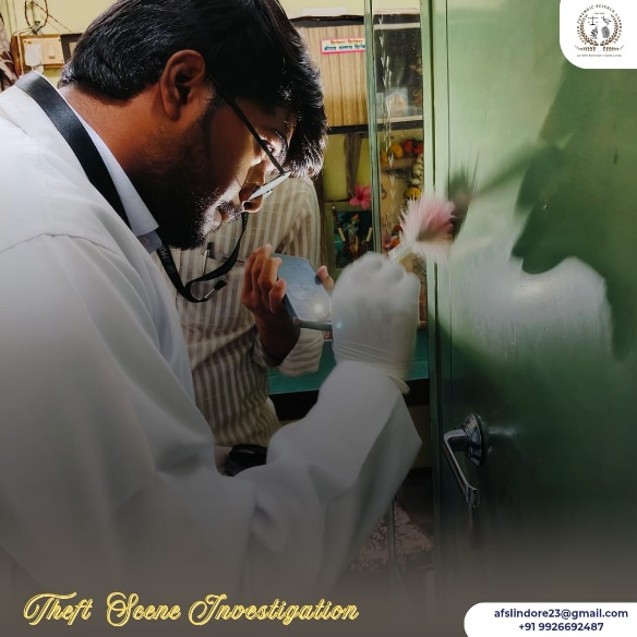
- Crime Scene Investigation
- CCTV & Video Analysis
- Audio/Video Examination
- Insurance Fraud Investigation
- Audio Transcription
- Vehicle Accident Investigation
- Fire and Arson Investigation
- Assist to All Legal Service Matters
- Free Forensic Consultancy for the Judiciary System
- Internship & Training for UG & PG Students (Online & Offline Mode)
- Deleted Data Recovery
- Refresher Courses/Training on Forensic Perspective to Investigational Officers of State Police, Public Prosecutors/Lawyers, Vigilance Officers of Banks and PSUs
Supported by seasoned forensic specialists, AFRS ensures that every trainee develops technical mastery, ethical clarity, and investigative intuition. By blending hands-on practice with authentic case insights, AFRS creates a transformative learning journey that prepares individuals to excel in modern forensic science.